
Why my old breakfast stopped working in perimenopause
When I changed my breakfast in perimenopause, this is what happened to my energy, cravings and focus.
Hands down, this is one of the most impactful nutrition changes I’ve made since becoming perimenopausal.
Before perimenopause, breakfast was usually an afterthought. Something quick, grabbed in a rush between getting ready and getting my daughter out of the door. A bowl of cereal, toast with jam or marmalade, maybe a tea and off I’d go.
But somewhere along the line, that stopped working for me.
Suddenly I was dealing with mid-morning energy crashes, intense hunger, cravings, brain fog and that feeling of already running on empty before the day had even properly started. I’d barely make it back from the school run before thinking about food again.
At first, I just put it down to stress, busy mum life, getting older, not sleeping well enough. But looking back now, it was one of the early signs that my body was changing.
Just over two years ago (or maybe more, as time still feels divided into “pre” and “post” Covid), I decided to experiment with changing my breakfasts. I started prioritising protein-rich breakfasts with healthy fats and fibre, many of them being savoury.
And honestly? I haven’t really looked back since.
The difference wasn’t dramatic overnight, but it was noticeable. My energy became steadier. I could focus better during the morning. I wasn’t constantly thinking about snacks, and those intense late afternoon cravings became much less frequent.
Now, that doesn’t mean every breakfast is perfect. Some mornings are still hectic and rushed. Sometimes breakfast is whatever I can assemble quickly between finding the PE kit and packing a lunch box. And yes, I still happily eat pancakes with my family on a Sunday morning. But when I do have a sweeter breakfast now, I really notice the difference in my energy and hunger levels afterwards.
These days I try to aim for around 20-30g of protein at breakfast, alongside fibre-rich foods to help keep me fuller for longer and support steadier blood sugar levels.
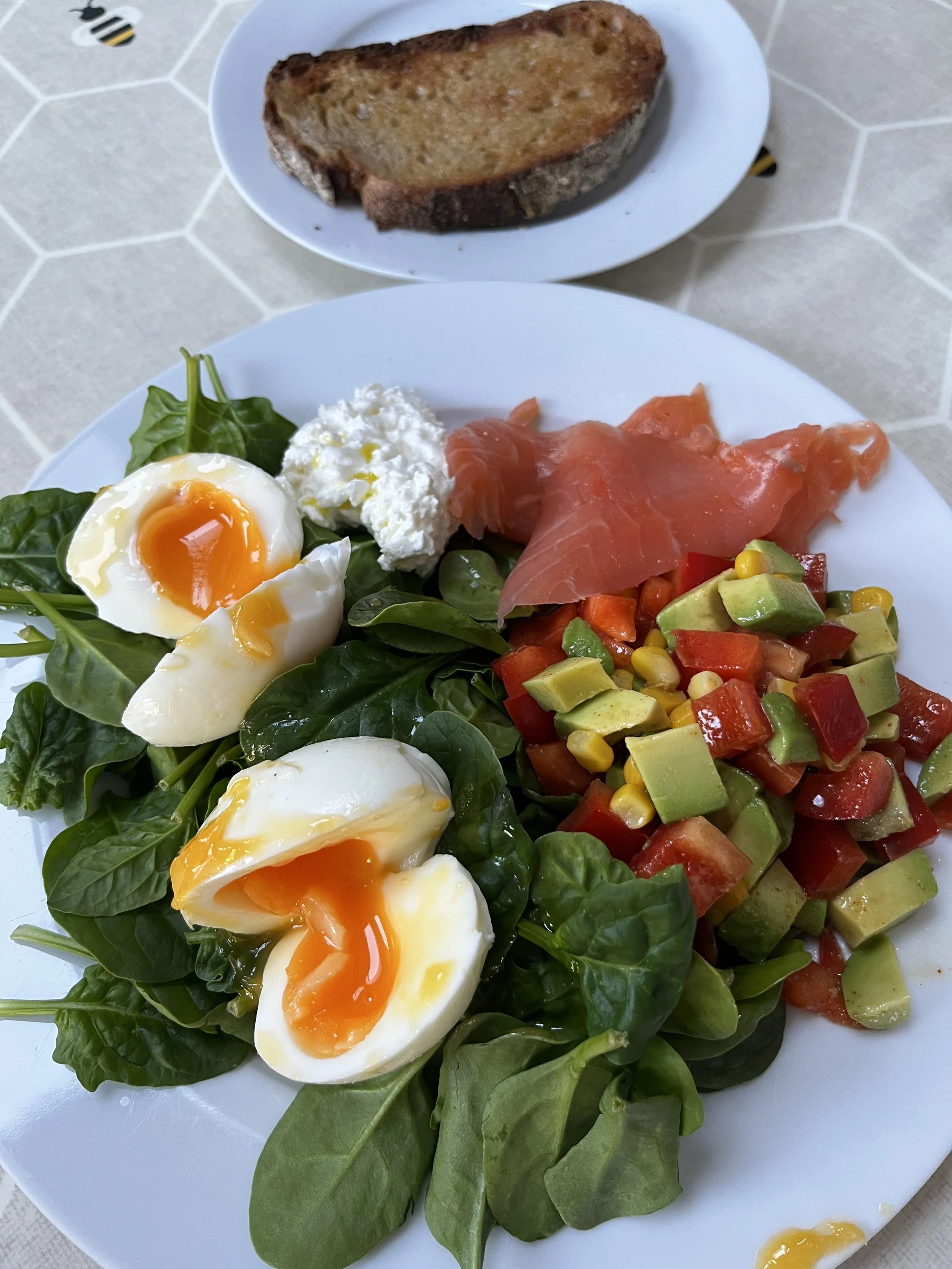
That might look like:
Seeded sourdough or wholegrain toast with eggs, veggies and smoked salmon or beans
Greek yoghurt with chia seeds, nuts and berries
Or simply leftovers from the night before, which is honestly one of my favourite quick and reliable options
For many women in perimenopause, eating this way can help with:
Feeling fuller for longer
Reducing energy crashes and cravings
Supporting focus and concentration
More stable energy through the day
Preventing overeating later on
Supporting muscle health, hormones and overall wellbeing
One thing I often say to women is that perimenopause can make us feel as though our body has suddenly become “more sensitive” to the habits we used to get away with. Skipping meals, surviving on caffeine, grabbing quick sugary breakfasts. Sometimes the strategies that worked in our 20s and 30s simply stop supporting us in the same way.
And while breakfast isn’t a magic fix for everything, for me it became one small but powerful shift that helped me feel a bit more like myself again.
In my work with women, this is one of the many areas we focus on inside my Menopause ENERGY Method, helping women refill their energy tank and feel supported rather than depleted by the end of the day.
Have you noticed your breakfast needs changing in perimenopause too?